//accessibility & resilience
I included reduced-motion alternatives, keyboard controls, focus management in the mobile menu, and a fallback for browsers where WebGL is unavailable.
//context
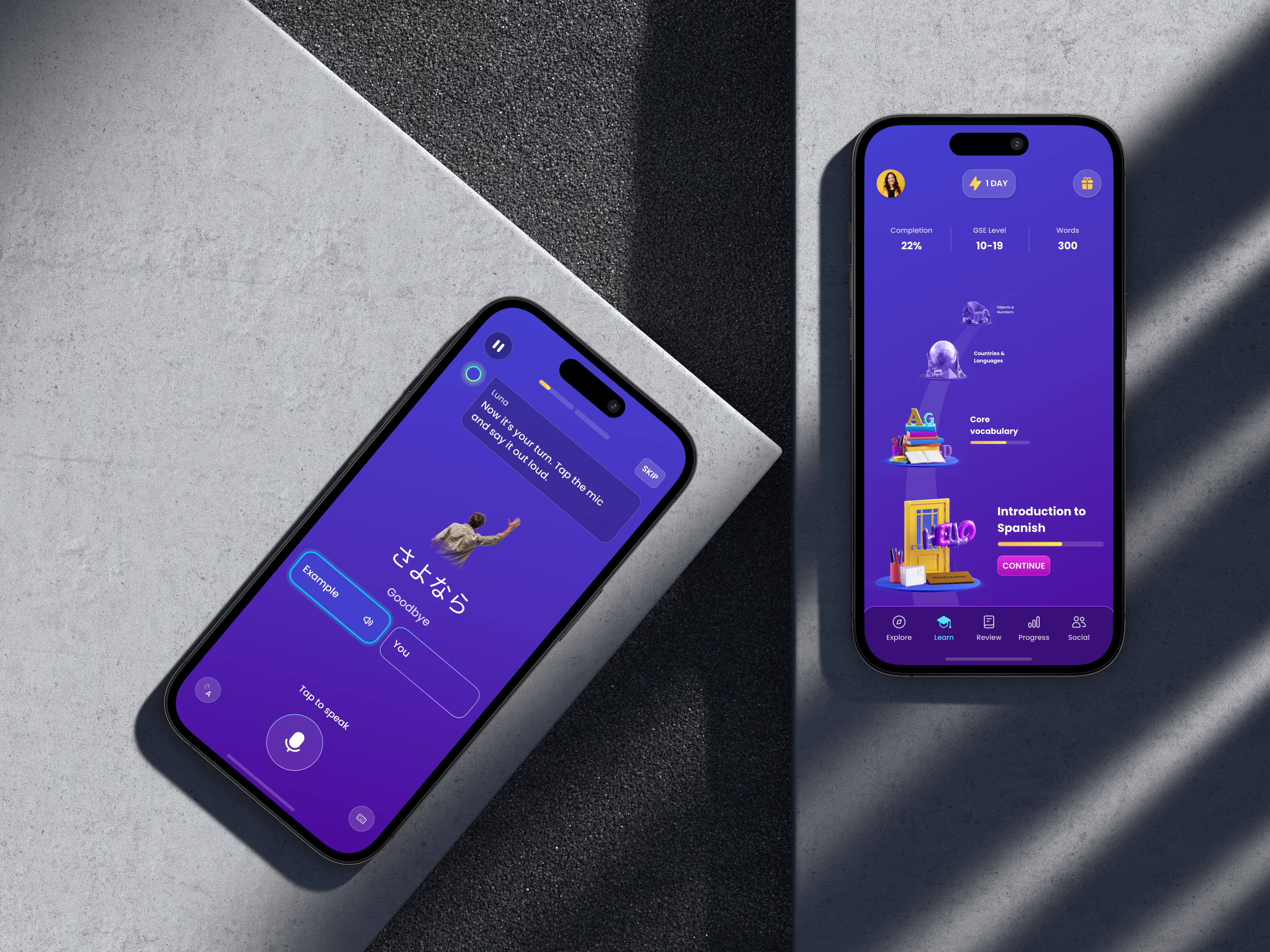
Pearson needed an internal site to introduce Language+ to colleagues across the organisation. I designed and built it in about two weeks, covering the product, its learning principles, and feedback from teachers.
I owned the art direction, page structure, interactions, and frontend implementation in Next.js, using Cursor. The site combined a scroll-driven product introduction with an interactive 3D phone.
Timeline
~2 weeks
Hero system
Realtime WebGL
Build model
AI-assisted frontend
//key design decisions
I used scrolling to introduce the product step by step, with the phone and copy changing together. The 3D scene rendered on demand, and reduced-motion settings gave visitors a simpler way through the page.
A product introduction controlled by scroll
A GSAP timeline keeps the phone, product screens, and copy in sync as visitors scroll forward or back.
An interactive 3D phone
The phone is rendered in WebGL. I built a shader transition to change its screen as visitors move through the product introduction.

AI across the product team
This section shows how AI fits into customer experience, design, engineering, content, and data work on Language+.
Core principles
Four principles explain the product: learning science, support for teachers, the Global Scale of English, and short daily practice.
Teacher testimonials
Quotes from teacher research connect the product to classroom needs and concerns about workload.
//accessibility & resilience
I included reduced-motion alternatives, keyboard controls, focus management in the mobile menu, and a fallback for browsers where WebGL is unavailable.
//reflection
The site shipped for an internal launch. Its result was a working product introduction delivered in two weeks; I did not measure its effect on adoption or revenue.